Ice cream is the undisputed king of summer desserts. Today, whenever we feel like refreshing, we can hold a portion of it in our hands in just a few minutes. However, the production of ice cream itself is far from a simple process, but a series of various chemical and physical reactions that determine not only the taste of ice cream, but also its structure. KTU scientist Aelita Zabulionė talks about the importance of air, fat, sugar and various nutritional additives in ice cream and what to pay attention to when making it at home.
Those who have tried making ice cream at least once probably know that it is not enough to simply mix our favorite fruits, cream and freeze this mass, because the result will not resemble a silky ice cream texture. Quite the opposite - we will probably get a piece of ice that is difficult to bite into.
This can happen for many reasons: improper fat emulsion, too little or too much sugar or air in the ice cream, freezing it too slowly, formation of large ice crystals. Note that even store-bought ice cream labels can contain various stabilizers, emulsifiers, or other additives - all usually to ensure the desired ice cream texture, which is not as easy to achieve and even more so to maintain - as it may seem at first glance.
"Ice cream is truly a complex dispersed system in which solid, liquid, and gaseous phases coexist. And it is precisely their totality, a certain proportion, that is the essence of quality ice cream," says A. Zabulionė, Head of the Sensory Analysis Laboratory of the Food Institute of Kaunas University of Technology (KTU).
For a silky texture, sugar and fat are essential
It is probably common to think that sugar is used in ice cream to make it taste better. However, A. Zabulionė explains that the role of various syrups, and sometimes honey, is far from limited to taste.
"Sugars in ice cream also perform another extremely important function - they lower its freezing point. This is why a certain amount of water in the ice cream remains unfrozen even at low temperatures. This concentrated liquid phase gives ice cream its softness and creaminess. In addition, sugars help form small ice crystals, thus giving ice cream its smoothness," says a KTU scientist.
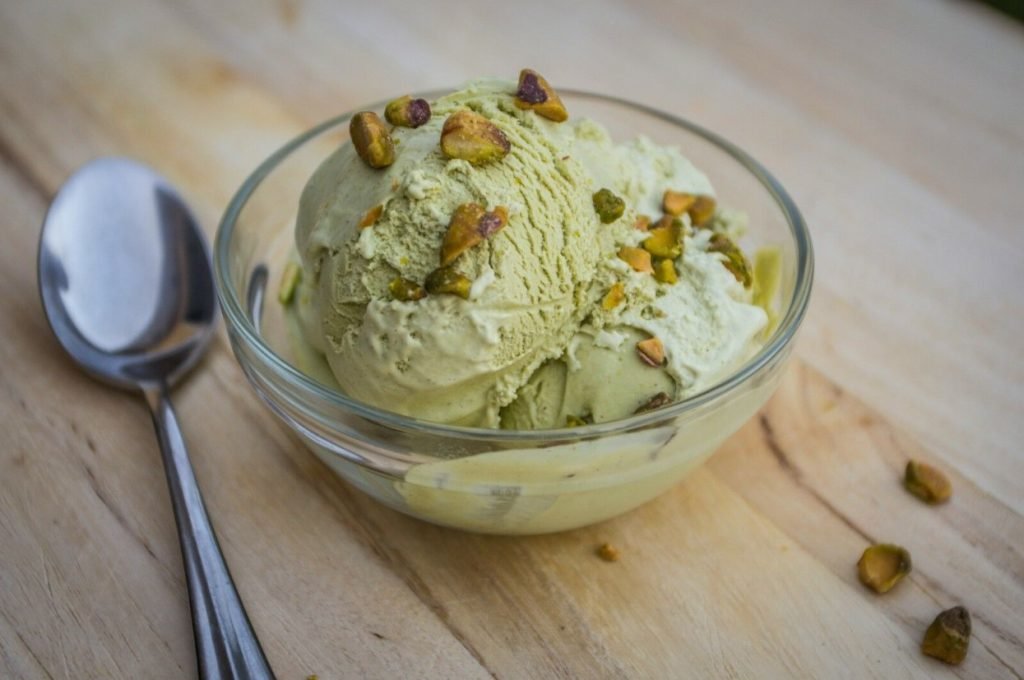
In addition to sugar, fat, usually obtained from milk or cream, also plays a very important role in the production of ice cream. Just think, when eating fruit sorbet and fruit-flavored plombyra, the sensation in the mouth is radically different. This is because the fat in creamy ice cream “masks” the frozen water crystals in the ice cream mass and, by coating our oral cavity, reduces the sensation of these crystals. In addition, we know that fats in food also serve as carriers of aromatic molecules, so in ice cream they also help to enhance the overall sense of taste.
However, to obtain a homogeneous ice cream mass, an emulsifier is also necessary - a substance that can bind the water and fat in the ice cream mass. In most cases, store-bought ice cream contains such food additives, but at home, a simple egg yolk is usually enough.
Is silky vegan ice cream possible?
However, the increasingly popular ice creams without animal products – milk, cream or eggs – pose unique challenges, the scientist notes.
"To create vegan ice cream that is as similar to cream as possible, knowledge of food chemistry and technology is needed, allowing for alternatives to essential components. For example, milk or cream alternatives made from coconut are often used instead of milk fat. Due to the high fat content, they provide a creamy texture. However, in this case, a specific coconut taste may be felt, which is not always desired, so sometimes other, neutral-flavored refined vegetable oils (e.g. rapeseed, sunflower), various nuts, especially soaked and crushed, are used, which provide a fairly creamy texture due to the significant fat and protein content," says A. Zabulionė.

Meanwhile, milk proteins and egg yolk can be replaced by various plant-based emulsifiers, such as sunflower lecithin, mono- and diglycerides, as well as thickeners, such as guar (E412), licorice (E410), xanthan (E415) gum, or carrageenan. These additives are important not only for vegan but also for creamy ice creams, especially those sold in stores.
"Product stability is one of the essential tasks of ice cream production. Stabilizers and thickeners, such as guar or xanthan gums, pectin, carrageenan, which are often found in ice cream, help maintain the structure of ice cream, prevent ice crystals from growing, improve resistance to melting and provide creaminess. This is very important for ice cream sold in supermarkets. After all, think about how long it takes for us to pick up ice cream, pay for it, and go home. During such a time, natural ice cream would melt very quickly, and if placed in a home refrigerator, where it freezes slowly, large ice crystals would form, which would make the ice cream no longer so attractive. Therefore, additives such as carrageenan, pectin or other similar substances allow us to ensure greater product stability, and at the same time - consumer satisfaction with it," explains KTU researcher A. Zabulionė.
Almost half of a serving of ice cream is just air
Those who are willing to invest a little more in making homemade ice cream have probably noticed special ice cream making devices in the store – which simultaneously freeze and mix the ice cream mass. Otherwise, this process is also called aeration. If you watch it long enough, you will see that the mass of the ice cream gradually almost doubles. And the culprit for this is none other than air.
“Air is an incredibly important component of ice cream, although we often don’t notice it. Its incorporation (aeration) has a significant impact on all the properties of ice cream. The incorporated air creates small, evenly distributed air bubbles in the ice cream, which makes it lighter and fluffier. The air bubbles also act as a physical barrier to the growth of ice crystals, helping to maintain small crystals and avoid a grainy texture,” explains A. Zabulionė.
In addition, ice cream with the right amount of air, the scientist explains, melts more slowly and evenly, leaving a pleasant sensation in the mouth. However, although air itself has no taste, the KTU researcher emphasizes that it is important not to increase it, as a higher concentration of air can harm the taste properties of ice cream.
"A larger amount of air can dilute the flavor, because there are fewer flavor molecules per unit volume. Therefore, it is important to ensure that there is as much of it as necessary, because both too little and too much of it can make the ice cream simply unacceptable," says A. Zabulionė.
Homemade ice cream: what you need to know
One of the most important components of a successful ice cream recipe is rapid freezing and constant stirring, the scientist says, as this is what guarantees the formation of smaller ice crystals.
"Small crystals are ideal because they are not felt in the mouth and create the benchmark, creamy texture. Slow freezing, on the other hand, allows water molecules to move around longer and combine into larger crystals, which makes the ice cream grainy. Stirring during freezing disrupts the growth of these crystals and introduces air, while ensuring uniform heat transfer and even distribution of crystals," the scientist explains.
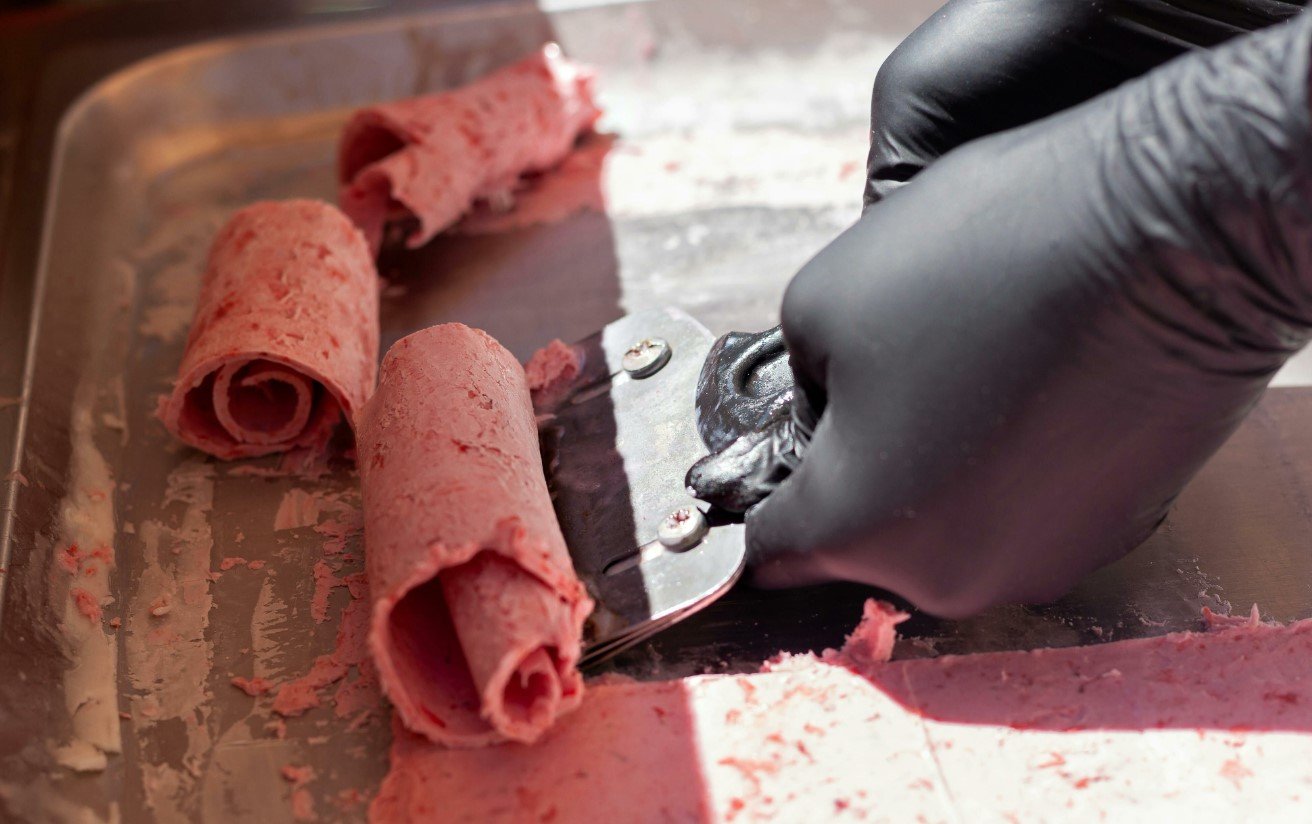
Interestingly, A. Zabulionė notes that this is the same process of ice cream production that we can see in resorts, where ice cream is eventually obtained by vigorously mixing and chopping the ice cream mass on a refrigerated table. However, making ice cream at home is different, and without a special ice cream making device, you may have to make a mess.
"Indeed, this can be not only a tedious process, but also not very successful - a lot will depend on whether the original recipe and the proportions of the components were accurate, whether an emulsifier was used, such as egg yolk, what capacity your freezer has, and whether you managed to control the freezing-whipping process in time. However, I would recommend trying it anyway! At worst, you will realize that it is not for you, and at best - you will have a special, unique homemade ice cream recipe," encourages the KTU scientist.
However, A. Zabulionė reminds us that when experimenting in the home kitchen, it is important to keep food safety in mind – especially when deciding to go the traditional route and use egg yolk as an emulsifier. In this case, it is necessary to use a food thermometer to make sure that the yolk has reached the right temperature during production to be safe to consume. Otherwise, there is a risk of foodborne infections.
"It is important to remember that eating bad ice cream can ruin your mood, but only to a certain extent. Eating unsafe ice cream can even require hospitalization. So I encourage you to experiment, but be careful when working with higher-risk products," warns A. Zabulionė.